

The Crucifixion of Jesus
T he holy and righteous God imputed all the sins of the world on His beloved Son, Jesus, to be the atoning sacrifice for our sins (Isa. 53:10) and to bear the punishment and curse of sin on our behalf (Gal. 3:13; 2 Cor. 5:21). Jesus was resurrected three days after His crucifixion, and He conquered death with His human body, so that all who believe in Him can receive eternal life in the resurrected Christ (Heb. 2:14; 1 Cor. 15:20-22). (See also God's Redemption Plan)
The Sin-Bearing Son of God
Surely He has borne our griefs and carried our sorrows; yet we esteemed Him stricken, smitten by God, and afflicted. But He was wounded for our transgressions, He was bruised for our iniquities; the chastisement for our peace was upon Him, and by His stripes we are healed. All we like sheep have gone astray; we have turned, every one, to his own way; and the LORD has laid on Him the iniquity of us all.
- Isaiah 53:4-6


The day after the supper at Bethany, on Palm Sunday before the crucifixion, the Lord Jesus entered Jerusalem in meekness and humility, riding on a young donkey. The crowds cried out, "Hosanna! Blessed is He who comes in the name of the Lord! The King of Israel!" (John 12:12-15). Hosanna is the Hebrew word for God's Salvation, and the street is still called Hosanna Avenue in Israel today. Jesus riding into Jerusalem a donkey fulfilled the prophecy of the prophet Zechariah, who had foretold this more than 500 years before Jesus was born, "Rejoice greatly, O daughter of Zion! Shout, O daughter of Jerusalem! Behold, your King is coming to you; He is just and having salvation, lowly and riding on a donkey, a colt, the foal of a donkey.” (Zech. 9:9). The Lord Jesus is the Prince of Peace, who brings salvation not by force but by sacrificial love (Isa. 9:6; Mark 10:45).
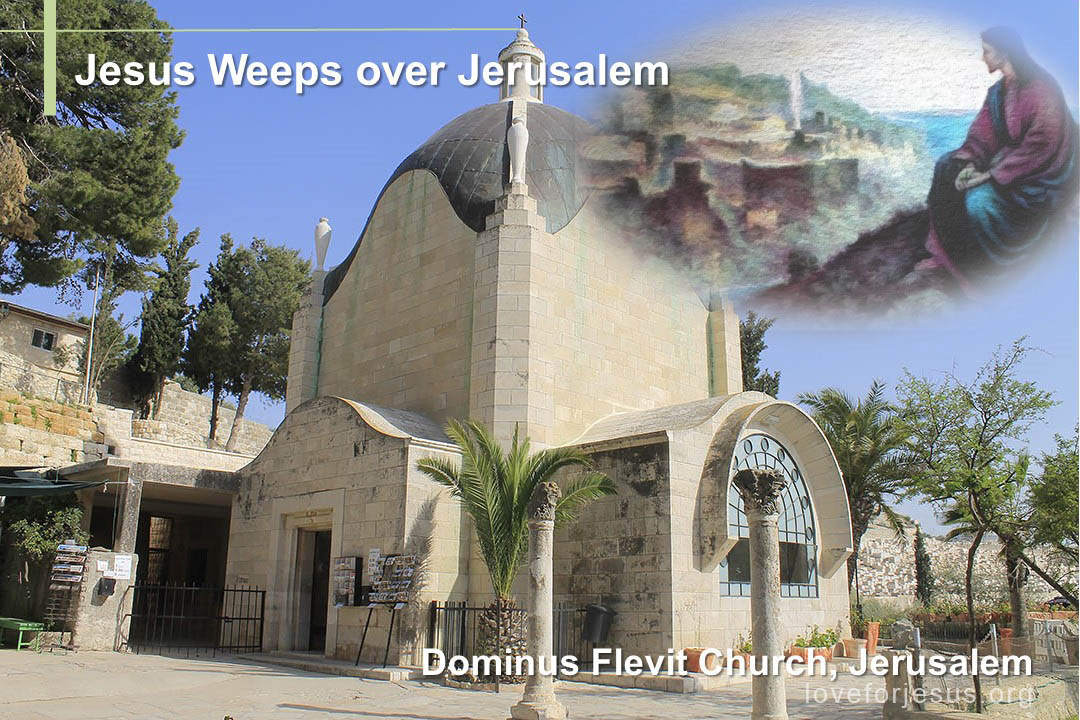
Jesus wept for Jerusalem many times, prophesied the destruction of the temple, and told His disciples three times that He would be mocked, scourged, and crucified in Jerusalem, and then resurrected three days later (Matt. 16:21; 17:22-23; 20:18- 19). The Lord Jesus wept over Jerusalem before His crucifixion, “O Jerusalem, Jerusalem, the one who kills the prophets and stones those who are sent to her! How often I wanted to gather your children together, as a hen gathers her chicks under her wings, but you were not willing! See! Your house is left to you desolate; for I say to you, you shall see Me no more till you say, ‘Blessed is He who comes in the name of the Lord!’ ” (Matt. 23:37-39). After the crucifixion, resurrection and ascension of Jesus, the temple in Jerusalem was burned down by the Roman army in 70 AD, and the Jews were scattered throughout the world.

On the day the Passover lamb must be killed (Luke 22:7-8), Jesus said at the Passover feast that He would be betrayed by His disciple (Luke 22:21-22). He instituted the Communion of Bread and Cup as a metaphor for His crucifixion, the breaking of His body, and the shedding of His blood for the atonement of sins. “Jesus took bread, blessed and broke it, and gave it to the disciples and said, 'Take, eat; this is My body.' Then He took the cup, and gave thanks, and gave it to them, saying, 'Drink from it, all of you. For this is My blood of the new covenant, which is shed for many for the remission of sins." (Matt. 26:26-28). The New Covenant fulfilled the Law of Moses and Jeremiah’s prophecy (Jer. 31:33; Eph. 2:15-16); Jesus was sold for 30 pieces of silver, and the money was thrown into the temple and given to the potter (Matt. 27:5-7), exactly as Zechariah foretold 500 years before Jesus was born (Zec. 11:12-13).

Before giving His life for us, Jesus knelt at the feet of His disciples and washed their feet at the Last Supper (John 13:2-5). He washed away the dirt of those He loved, and He also washed away our sins with His precious blood shed on the Cross, so that we can love one another (Heb. 1:3; 1 Pet. 1:22). Jesus said to His disciples that night, "A new commandment I give to you, that you love one another; as I have loved you, that you also love one another. By this all will know that you are My disciples, if you have love for one another." (John 13:33-35). God is love, and love is from God! “In this is love, not that we loved God, but that He loved us and sent His Son to be the propitiation for our sins.” (1 John 4:7-10). As Paul correctly pointed out, “If someone says, ‘I love God,’ and hates his brother, he is a liar; for he who does not love his brother whom he has seen, how can he love God whom he has not seen?” (1 John 4:19-21).
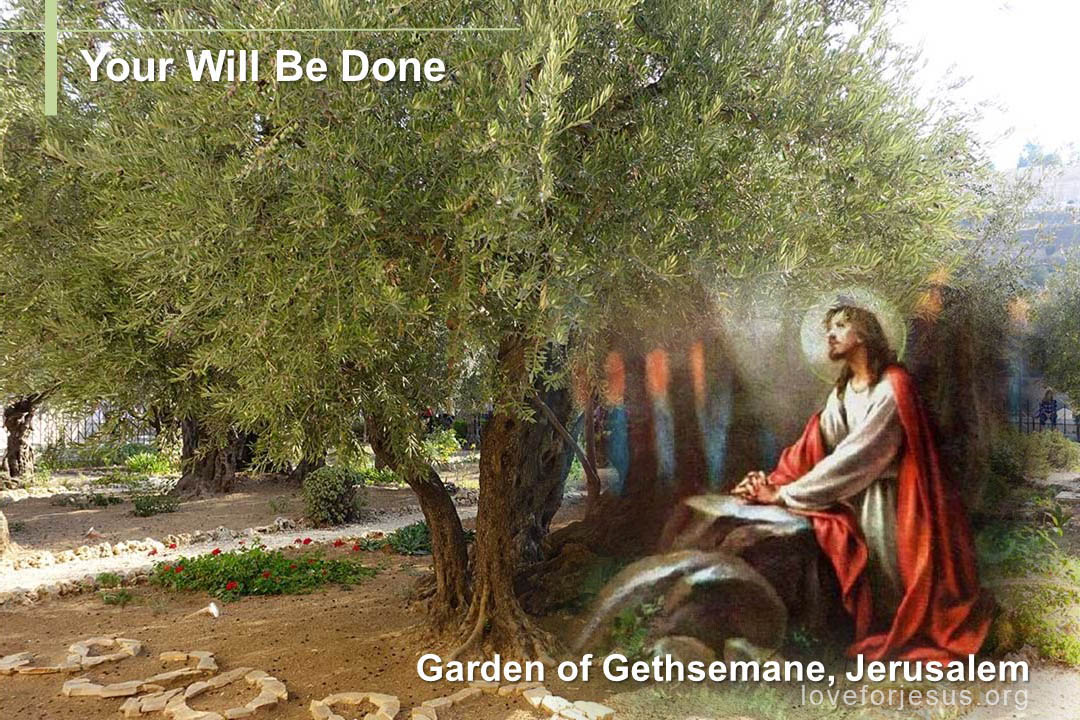
After the supper Jesus went with His disciples to the Garden of Gethsemane (Matt. 26:36), where He prayed earnestly three times, saying, “O My Father, if it is possible, let this cup pass from Me; nevertheless, not as I will, but as You will.” (Matt. 26:39, 42-46). The Lord Jesus humbly came into the world to fulfil the will of God the Father (John 4:34). He obeyed the Father's will by carrying our sins on His body, facing the cruel torture of the cross and humbling Himself to the point of death (Phil. 2:6-8; John 10:18). Jesus willingly drank the bitter cup of sin and death (Isa. 53:6; Heb. 2:14), so that we may all receive the cup of blessing for life (Rom 6:23), and share the cup of eternal glory with the Lord at His Second Coming (Heb. 2:10). King David described Jesus' obedience more than 1,000 years before Christ, “Burnt offering and sin offering You did not require. Then I said, Behold, I come; In the scroll of the book it is written of me.”(Ps. 40:7-8, 13-15).
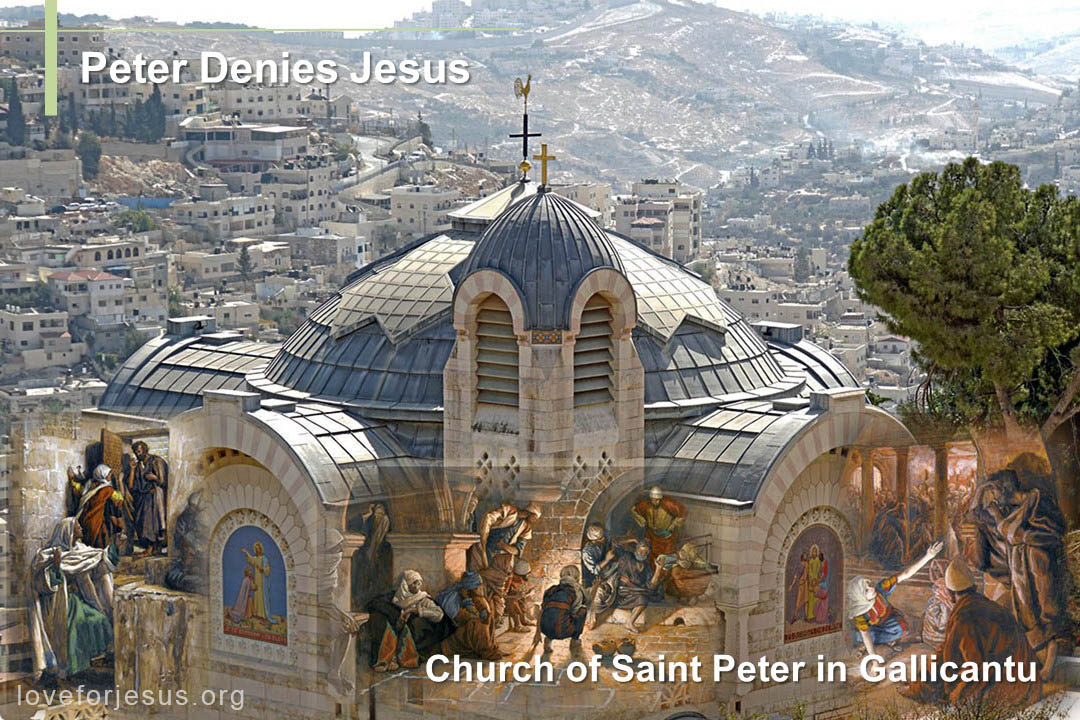
After the Last Supper, on the way to the Garden of Gethsemane, when Peter vowed to lay down his life for the Lord, Jesus told Peter clearly, "Assuredly, I say to you that this night, before the rooster crows, you will deny Me three times.” (Matt. 26:31-35). That very night, Jesus was arrested after praying in the Garden of Gethsemane. Three people identified Peter as Jesus’ accomplice, and after Peter denied it three times, the rooster crowed, exactly as Jesus said (Matt. 26:70-74). God humbles the proud (Mic. 6:8) and exhorts us to “Watch and pray, lest you enter into temptation. The spirit indeed is willing, but the flesh is weak.” (Matt. 26:41). God loves us with everlasting mercy and love (Heb. 4:14-16; Psalm 31:7). The arrest and abandonment of Jesus fulfilled the prophecy of Zechariah, made more than 500 years before Jesus: "Strike the Shepherd, and the sheep will be scattered." (Zech. 13:7; Mark 14:50).
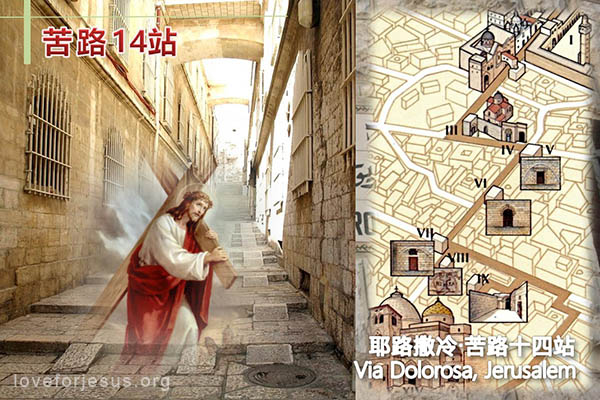
As Jesus Himself foretold, He was arrested and judged as a criminal, mocked, scourged, crowned with thorns by Roman soldiers, and carried a heavy cross to be executed outside the city (Luke 18:31-33) (See Via Dolorosa - the Stations of the Cross). God imputed all the sins of the world to His beloved Son, bearing the punishment and curse of sin in our place (Isa. 53:6, 10), so that we might become the righteousness of God in Him (Gal. 3:13; II Cor. 5:21). What Amazing Grace - the Judge of sin became the Substitute for sin, through which the righteousness and love of God is revealed! Jesus’ atonement fulfilled Isaiah's prophecy over 700 years before Christ, "Surely He has borne our griefs and carried our sorrows; yet we esteemed Him stricken, smitten by God, and afflicted. But He was wounded for our transgressions, He was bruised for our iniquities; the chastisement for our peace was upon Him, and by His stripes we are healed.” (Isa. 53:4-5)

Jesus was taken to Calvary and crucified with the two thieves (Luke 23:33), foreshadowing three endings in life: Jesus died for love and righteousness and received crown of glory. The repentant thief was justified by faith and went to heaven with the Lord. The mocking thief was condemned to hell (Luke 23:39-43). Jesus willingly became the scapegoat for mankind (1 Pet. 2:24), and His first words on the cross were "Father, forgive them, for they do not know what they do." (Luke 23:34), and the last words were 'It is finished!' (John 19:30). Jesus was mocked, tortured, cast lots for his clothes, interceded for criminals, pierced in the ribs, fulfilling one by one the prophecies of King David (Ps. 22:7-8, 14-18), Isaiah (Isa. 53:12) and Zechariah (Jas. 12:10) hundreds of years before Christ. “The fear of the Lord is the beginning of wisdom” (Prov. 9:10; Isa. 11:2); God makes the wise fools in a way that seems foolish to man (I Cor. 1:18-21) (See Blood on the Mercy Seat).
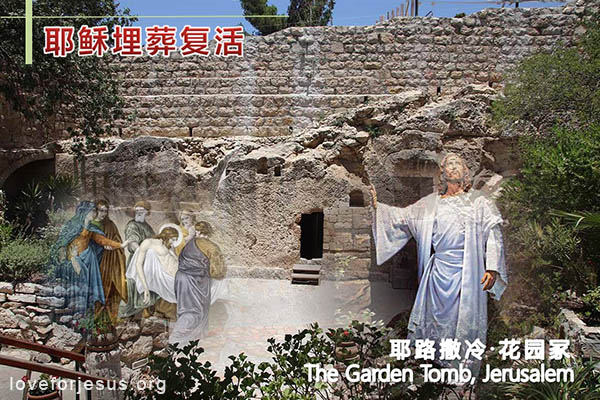
Jesus was buried in a tomb hewn out of the rock (Matt. 27:59-60), but God resurrected Him on the third day (Matt. 28:1-6). Jesus died and was buried on Passover (Luke 23:44-46), the day before the Sabbath of Unleavened Bread (Mark 15:42; John 19:31), and was raised on the first day of the week (Matt. 28:1), the Sunday following the weekly Sabbath. Just as Jesus told the Pharisees before his crucifixion, "For as Jonah was three days and three nights in the belly of the great fish, so will the Son of Man be three days and three nights in the heart of the earth. ” (Matt 12:40) (See Crucifixion and Resurrection Day). Jesus defeated the power of death in His human body, delivering humanity from sin and death in Adam and receiving eternal life through Jesus’ resurrection (Heb. 2:14; 1 Cor. 15:20-22). The resurrection of Jesus with no broken bones (John 19:31-33) fulfilled the prophecy of King David (Acts 2:30-32; Ps. 34:20). (Note)
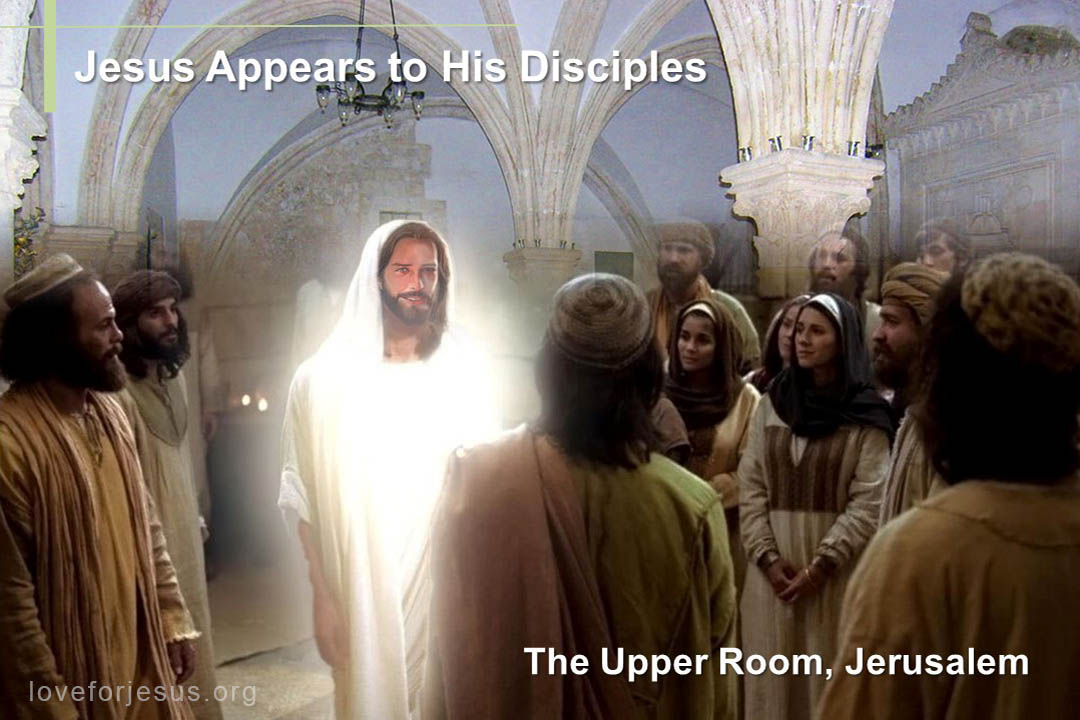
After Jesus’ resurrection, He appeared to His disciples (Luke 24:36-43) and to the crowds for 40 days, speaking of the Kingdom of God. Jesus ministered to His disciples to prepare them for His ascension to heaven and asked them to wait in Jerusalem for the Holy Spirit promised by the Father (Acts 1:3-5). This gave the disciples great confidence and strength. They eagerly preached the good news of Jesus’ crucifixion and resurrection (1 Cor. 15:3-6). All who believe in Him will share the power of His resurrection (Ps. 23:3), be born again of the Holy Spirit and become a new creation, entitled to be a child of God (John 1:10-13). The resurrection of Jesus fulfilled the prophecy of Isaiah more than 700 years before Christ, “He shall see the labor of His soul, and be satisfied. By His knowledge My righteous Servant shall justify many, for He shall bear their iniquities.” (Isa. 53:11)

When Jesus appeared to His disciples in Galilee after His resurrection, He re-enacted the scene of the miraculous catch of fish and prepared breakfast for them (John 21:4-6,9). Jesus was again demonstrating His love and provision. Later, Jesus asked Peter three times, “Do you love me?” in response to Peter's three denials of the Lord after Jesus' arrest (Matt. 26:74-75). Three times Peter expressed his love for the Lord, and three times Jesus entrusted him with the leadership of ‘feeding my sheep’ (John 21:17). Jesus removed the guilt and shame of Peter's denial with His unconditional love and forgiveness, and gently restored Peter, who became the leader and a pillar of the early church. Jesus once told Peter, “I will give you the keys of the kingdom of heaven, and whatever you bind on earth will be bound in heaven, and whatever you loose on earth will be loosed in heaven.” (Matt. 16:18-19)

On the 40th day after His resurrection, Jesus told His disciples to wait for the Holy Spirit, “you shall receive power when the Holy Spirit has come upon you; and you shall be witnesses to Me in Jerusalem, and in all Judea and Samaria, and to the end of the earth.” (Acts 1:8), and was then taken up to heaven in the presence of His disciples (Acts 1:9-11). Through Jesus’ redemption, God enables humanity to be born again in Christ as a new creation to return to God with His divine nature (2 Cor. 5:17-19), restoring God's original purpose of creating mankind in His own image (Gen. 1:26). Jesus returned to the Father as the Son of Man in His glorified body, so that through Him mankind can return to God’s presence and glory (John 14:6,12). Jesus ascended to heaven and sat at the right hand of the Father, as King David prophesied over 1000 years before Christ (Ps. 68:18; 110:1; Heb. 1:1-3).


